
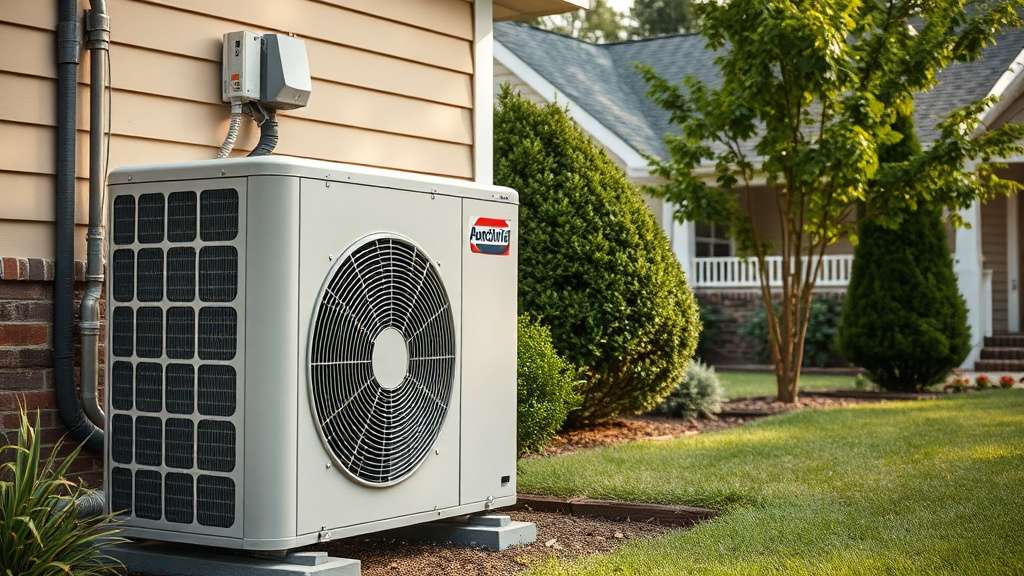
The System Most Augusta Homeowners Are Still Overlooking
Most people assume a heat pump is just a fancy air conditioner. That assumption is costing them real money every single month.
A heat pump doesn’t generate heat the way a furnace does. It moves heat — pulling warmth from the outdoor air and transferring it inside during winter, then reversing the process to cool your home in summer. One system. Two jobs. And in a climate like Augusta’s, that’s a remarkably efficient arrangement.
Heat pump installation in Augusta, GA has surged over the past few years, and the reasons go well beyond marketing. Homeowners who’ve made the switch are seeing energy bills drop by 30% to 50% compared to running separate gas furnaces and air conditioners. That’s not a rough estimate — that’s what the U.S. Department of Energy has documented for homes in mixed-climate zones, which includes most of the CSRA.
So why isn’t everyone already running one? Mostly, it comes down to outdated assumptions about cold-weather performance. That’s worth addressing head-on.
Does a Heat Pump Actually Work in Georgia Winters?
This is the question we hear most often at Anderson HVAC, and the honest answer has changed significantly. Older heat pump technology struggled below 35°F — that was a legitimate limitation. Modern systems, particularly cold-climate heat pumps, maintain strong efficiency down to 5°F or even lower.
Augusta winters average a low of around 34°F in January, with temperatures dropping below freezing only occasionally. The CSRA rarely sees extended cold snaps that would push a heat pump to its limits. What that means in practice: most Augusta homeowners can run a heat pump as their sole heating and cooling system without any backup heat source kicking in more than a handful of days per year.
Compare that to Atlanta, which sits at a higher elevation and sees more sustained cold. Augusta’s geography — sitting in a river valley with milder winter temps — actually makes it close to ideal heat pump territory. We’ve installed systems in Grovetown, Evans, and Martinez where homeowners went full winters without ever activating backup heat strips.
The performance gap between a heat pump and a gas furnace during a typical Augusta winter? Essentially nonexistent for comfort. The difference shows up on your utility bill.
Heat Pump Installation in Augusta, GA: What the Real Costs Look Like
Transparency matters here, so here are actual numbers from what homeowners are seeing in 2026.
A standard heat pump installation for a 1,500 to 2,000 square foot Augusta home typically runs between $5,500 and $9,500, depending on the unit’s efficiency rating (SEER2), the size of the system, and whether ductwork modifications are needed. High-efficiency variable-speed systems sit toward the top of that range.
That sounds like more than a basic central AC unit upfront — and it is, usually by $1,000 to $2,500. But here’s what the comparison often leaves out: when your traditional setup includes both an air conditioner and a gas furnace, you’re maintaining two separate systems. Two sets of repairs, two sets of tune-ups, two aging components to replace on different schedules.
A heat pump consolidates that into one system. Fewer service calls, fewer parts, and one annual maintenance visit covers both heating and cooling.
On the energy side, homeowners switching from electric resistance heat (common in older Augusta homes) to a heat pump often see their heating costs drop by 60% or more. If your current setup is a gas furnace paired with a standard AC unit, the savings are more modest but still meaningful — typically $400 to $700 per year depending on your home’s size and insulation quality.
Federal Tax Credits That Change the Math
The Inflation Reduction Act’s energy efficiency provisions are still active in 2026, and they apply directly to heat pump installations. Qualifying homeowners can claim a federal tax credit of up to $2,000 for heat pump installation — not a deduction, an actual credit off your tax bill.
Georgia Power also offers rebates for qualifying high-efficiency systems. When you stack federal credits with utility rebates, the effective upfront cost of a heat pump installation can drop by $2,500 to $3,500 compared to the sticker price. That changes the payback math dramatically.
What No One Tells You About Switching Systems Mid-Life
Here’s something most homeowners don’t think about until they’re already on the phone with a contractor: the age of your existing system matters more than you’d expect when deciding whether to switch.
If your current AC unit is 8 years old and working fine, ripping it out to install a heat pump requires you to absorb the full replacement cost now rather than spreading it out. That’s a harder financial case to make.
But if your system is 12 to 15 years old — which is the average lifespan of a central AC unit — you’re already looking at replacement in the near future regardless. That’s the moment when switching to a heat pump instead of doing a like-for-like replacement becomes an obvious financial decision. You’re spending money you’d have to spend anyway, and you get a better system out of it.
At Anderson HVAC, we’ve seen homeowners try to squeeze two or three more years out of aging systems only to end up paying for emergency AC repair in Augusta, GA every summer until the unit finally dies. That pattern almost always costs more than proactive replacement would have.
The same logic applies to heating. If you’re facing a potential furnace repair in Augusta, GA on a system that’s 15-plus years old, the repair cost vs. replacement conversation almost always tips toward replacement — and at that point, a heat pump is worth serious consideration.
Ductwork: The Variable That Can Make or Break Your ROI
Most homes in Augusta built after the 1980s have existing ductwork that can work with a heat pump without major modification. But ductwork condition matters more for heat pumps than for standard AC systems.
Heat pumps move conditioned air more continuously than a furnace does — they tend to run longer cycles at lower intensity rather than short, high-output bursts. Leaky or undersized ductwork that a furnace could compensate for will noticeably reduce a heat pump’s efficiency.
A good installer will do a duct leakage assessment before installation. If your ducts are losing more than 15% of conditioned air to leaks — which is surprisingly common in older CSRA homes — sealing them before or during installation is money well spent. Duct sealing typically runs $300 to $700 and can improve system efficiency by 20% or more.
Don’t skip this step to save a few hundred dollars upfront. It’s one of the most common mistakes we see when homeowners go with the lowest bid on a heat pump installation.
Heat Pump Maintenance: Lower Stakes Than You’d Expect
One concern we hear regularly is that heat pumps are more complicated than traditional systems and therefore harder to maintain. The opposite is generally true.
Because a heat pump handles both heating and cooling, you schedule one annual tune-up instead of two. The service visit covers refrigerant levels, electrical connections, coil cleaning, and filter inspection — the same basic checklist, just once a year.
Heat pump repair calls are also less frequent on newer systems when they’re properly sized and installed. The most common issues we respond to — refrigerant leaks, reversing valve problems, and thermostat calibration — are all straightforward fixes for an experienced technician. They’re not the catastrophic failures that a cracked heat exchanger in a gas furnace represents.
For Augusta homeowners who want a reliable system with minimal maintenance hassle, the heat pump’s track record is strong.
Is a Heat Pump Right for Your Home Specifically?
Most Augusta homes are good candidates. A few situations where traditional systems might still make more sense:
- Homes without existing ductwork where the duct installation cost would significantly increase the project total (though ductless mini-split heat pumps can solve this)
- Homes with very old electrical panels that can’t support the load without an upgrade
- Homeowners planning to sell within two years who won’t recoup the investment through energy savings
For everyone else — particularly homeowners whose current system is aging, who are tired of high electric bills in shoulder seasons, or who want one system instead of two — a heat pump is worth a serious look.
Anderson HVAC has been serving the Augusta area for years, and our team of EPA-certified technicians has handled everything from straightforward upgrades to complex retrofits in older CSRA homes. We know which systems perform well in this specific climate, which brands have the best service networks locally, and where homeowners typically underestimate project scope.
If you’re thinking about making the switch or just want to understand whether it makes sense for your specific home, reach out to the team at Anderson HVAC. We’ll give you a straight answer — not a sales pitch — and a clear-eyed look at whether heat pump installation in Augusta, GA is the right move for your situation.