
August Is a Different Animal in the CSRA
Your electricity bill in August isn’t just high — it’s often $40 to $90 more than what you paid in June, even if you never touched the thermostat. That gap isn’t random. It’s the predictable result of several compounding factors that all peak at the same time, turning your already-working AC system into an energy-burning machine.
Augusta’s late summer is brutal in ways that matter mechanically. Overnight lows that refuse to drop below 75°F mean your system never gets a recovery window. Your attic can hit 140°F by mid-afternoon. Humidity levels stay stubbornly high, which forces your AC to run longer to pull moisture out of the air before it can even begin cooling the space. June’s heat is a warm-up. August is the main event.
And here’s what most homeowners don’t account for: the equipment running through that August heat is typically a year older, dirtier, and more stressed than it was when the season started. Those factors stack on top of each other in ways that show up directly on your bill.
The Dirty Coil Problem Nobody Warns You About
Your AC system’s evaporator coil — the component inside your air handler that actually absorbs heat from your home — relies on clean airflow to do its job. Over the course of a cooling season, a layer of dust, pet dander, and airborne debris builds up on that coil’s surface. It sounds minor. It isn’t.
Even a thin layer of grime acts as insulation between the coil and the air moving across it. The heat transfer process slows down. Your system runs longer cycles trying to hit the same target temperature. By August, after running nearly nonstop since May, that coil is at its dirtiest point of the year — right when outdoor temperatures are demanding the most from your equipment.
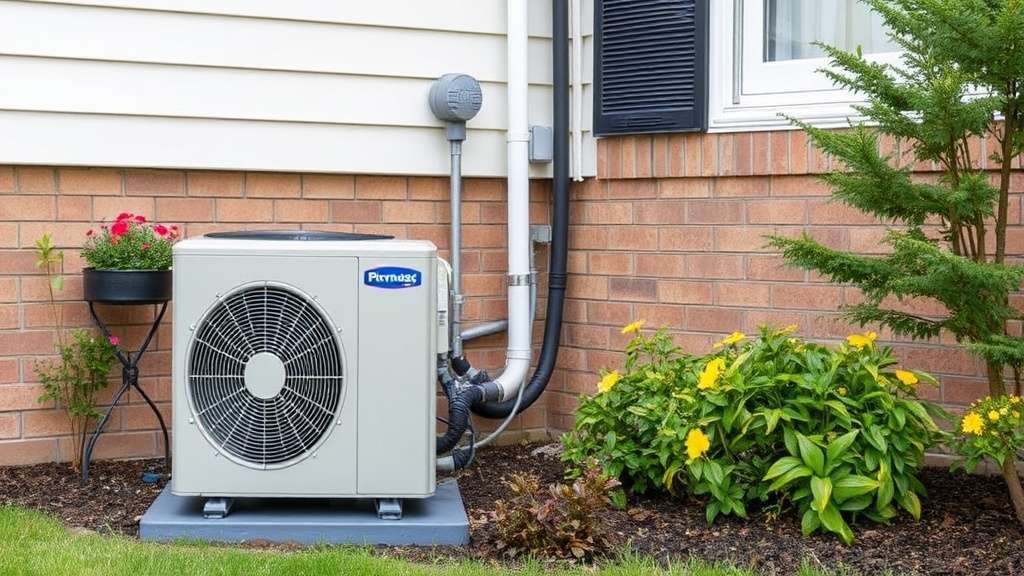
The outdoor condenser coil faces the same problem from the other direction. It releases heat from your home into the outside air, but if it’s clogged with cottonwood seeds, grass clippings, or dirt, that heat has nowhere to go efficiently. A condenser coil running at reduced capacity in 98°F Augusta heat can add meaningfully to your monthly bill — and it also accelerates compressor wear in ways that lead to expensive repairs down the road.
How Aging Equipment Turns August Into a Crisis
A well-maintained 5-year-old system and a neglected 12-year-old system set to the same temperature will not cost the same amount to run. The older unit’s efficiency has degraded — refrigerant charge may have drifted, capacitors are weakened, and the compressor works harder to achieve the same output. Manufacturer efficiency ratings (that SEER number on the spec sheet) represent ideal conditions. Real-world performance in a system that hasn’t had regular air conditioning maintenance often falls significantly short of that number.
The math gets painful fast. An AC unit running at 70% of its rated efficiency has to run roughly 30% longer to cool the same space. Multiply that by August’s demand — 12 to 16 hours of runtime per day in some CSRA homes — and you’re adding real dollars to every single bill.
In our 15 years serving the Augusta area, the pattern is consistent: the calls that come in during August’s peak heat are almost never from homeowners with recently serviced equipment. They come from people whose systems haven’t been touched in two or three seasons. The unit didn’t fail overnight — it degraded slowly through spring and early summer, and August finally exposed it.
Your Ductwork Is Probably Losing More Than You Think
This is the one most people overlook entirely. Your AC unit might be working fine. Your coils might be reasonably clean. But if your duct system has leaks — and a surprising number of CSRA homes do — a meaningful portion of the cool air you’re paying to produce never reaches your living space.
Ducts in unconditioned spaces like attics and crawl spaces take a real beating over time. Joints separate slightly. Flex duct develops small tears. Poorly sealed connections leak conditioned air directly into 130°F attic space. Studies from the Department of Energy suggest that duct leakage in typical homes wastes a significant share of cooling energy — and in Augusta’s climate, that waste is concentrated in the hottest months when your system runs hardest.
Signs your ducts may be underperforming include rooms that never seem to cool down no matter how long the system runs, unusually high bills even with a newer unit, and a system that short-cycles because it can’t maintain adequate static pressure. A duct inspection and sealing service can recover that lost efficiency without touching the equipment at all.
AC Maintenance in Augusta, GA: What It Actually Does for Your Bill
Scheduling AC maintenance in Augusta, GA before the peak season isn’t just a box to check. Done properly, a maintenance visit addresses the specific failure points that compound into August’s worst bills.
A thorough air conditioning maintenance appointment should include cleaning both the evaporator and condenser coils, checking and correcting refrigerant charge, testing capacitors and contactors that are known to degrade under heat stress, verifying airflow through the system, and inspecting the duct connections at the air handler. Capacitor failure, for example, is one of the most common reasons systems stop working on the hottest days of the year — and it’s a $150–$250 fix during maintenance versus an emergency weekend call that costs considerably more.
The timing matters. A system serviced in April is in much better shape to handle August than one serviced the previous October. Coils collect debris during the pollen-heavy spring months. Refrigerant issues that were marginal in mild weather become critical when outdoor temps hit the upper 90s. Ideally, annual maintenance happens in spring — but if yours hasn’t happened yet this season, getting it done now still reduces the damage August can do.
What You Can Do Right Now Without Calling Anyone
There are a few things worth checking before a technician arrives. Make sure your air filter has been changed within the last 30–60 days — a clogged filter is one of the fastest ways to suffocate your system’s efficiency. Clear any vegetation or debris within two feet of your outdoor condenser unit. Make sure all supply and return vents inside your home are open and unobstructed by furniture.
These steps won’t substitute for a professional inspection, but they remove the low-hanging fruit that can quietly add $20–$30 per month to your bill.
The Compounding Effect — Why Late Summer Bills Are the Worst
August bills don’t just reflect August’s heat. They reflect everything that went wrong from May through July — every long cycle from a dirty coil, every hour of reduced efficiency from a drifting refrigerant charge, every degree of heat that leaked back in through unsealed ducts. The costs accumulated quietly, and August’s demand finally makes them impossible to ignore.
The good news is that most of these problems are entirely fixable. AC repair in Augusta, Georgia addresses the mechanical issues. Maintenance prevents them. And for systems that have genuinely aged past the point of cost-effective repair — typically units over 15 years old with rising repair histories — modern air conditioning installation with a high-efficiency unit can cut operating costs dramatically compared to grinding through another summer on aging equipment.
Anderson HVAC has been working through Augusta summers since 2011, and Kennith Anderson built this company on one straightforward principle: treat every customer the way you’d want your own family treated. That means giving honest assessments, not selling repairs or replacements people don’t need, and making sure the work is done right the first time. As an Authorized Rheem Dealer with over 30 years of combined HVAC experience across the team, the goal is always the same — keep your system running efficiently so your bills reflect the energy you actually need, not the energy a struggling system wastes.
If your August bill already has you wincing, a same-day estimate and a thorough maintenance inspection can tell you exactly where the waste is coming from — and what it will take to stop it.
Don’t let another August go by paying for inefficiency you don’t have to accept. The right maintenance at the right time is one of the few home improvement investments that pays you back directly, every month, on your utility bill.
Written by the Anderson HVAC team — family-operated HVAC specialists serving the Augusta, GA area since 2011, with over 30 years of combined industry experience.
Schedule your AC maintenance visit or request a same-day estimate at callandersonhvac.com.