
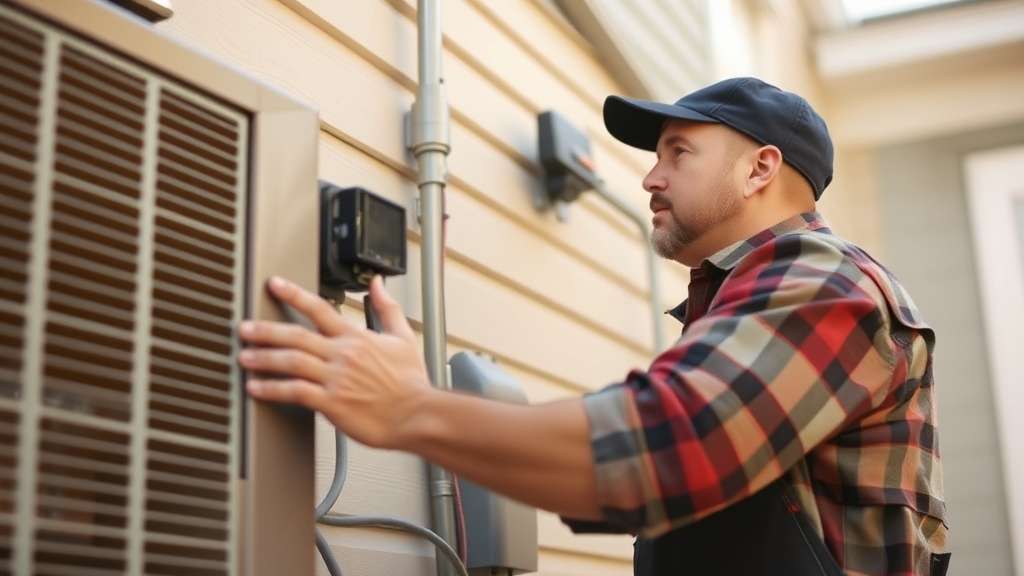
Most homeowners don’t realize their HVAC system is about to fail until it already has — usually on the hottest Saturday in August or the coldest night in January. That’s not bad luck. That’s physics. Systems running hardest under extreme conditions are the ones most likely to give out.
If you’re searching for emergency HVAC repair in Augusta, GA or anywhere in the Grovetown area, the worst thing you can do is wait and see. Some warning signs are your system’s last call before a complete breakdown. Knowing which ones demand immediate action — and which can hold until Monday — could save you thousands of dollars and a genuinely miserable situation.
These are the five signs that should never wait for a scheduled appointment.
Sign #1: Your System Won’t Turn On During Extreme Heat or Cold
Georgia summers routinely push past 95°F with humidity that makes it feel even hotter. Grovetown winters aren’t as dramatic, but when temperatures drop into the mid-20s — which happens several times a season — a non-functioning heater becomes a health risk within hours, especially for young children and elderly family members.
A system that completely refuses to start is different from one that’s just running poorly. If you’re pressing the thermostat, hearing nothing, and feeling no airflow whatsoever, the cause could range from a failed capacitor (a $150–$300 fix) to a dead compressor (a $1,200–$2,500 repair) to a blown control board. You won’t know which until a technician looks at it — and the severity gap between those scenarios is enormous.
Don’t assume it’s the thermostat batteries and go to bed. When outdoor temps are dangerous, a completely dead system is an emergency.
Sign #2: You Smell Something Burning — Even Briefly
This one gets dismissed more than any other warning sign, and it’s the most dangerous one on this list. A brief burning smell when you first turn on heat for the season can be normal — dust burning off the heat exchanger. That smell should disappear within five to ten minutes.
A burning smell that persists, smells like melting plastic, or returns every time the system runs is a different situation entirely. That’s typically a sign of an overheating motor, failing electrical components, or — most seriously — a cracked heat exchanger leaking combustion gases into your living space.
A cracked heat exchanger doesn’t just mean expensive repairs. It means potential carbon monoxide exposure. CO is odorless, so if you smell something burning AND your carbon monoxide detector goes off, get everyone out of the house first and call 911. Then call for emergency HVAC service. This is not a wait-until-morning situation under any circumstances.
Over the years serving homes throughout the CSRA, the team at Anderson HVAC has found cracked heat exchangers in systems that homeowners described as “running fine except for a small smell.” Fine-looking systems can be genuinely dangerous.
Sign #3: No Airflow from Your Vents (But the System Is Running)
Your air conditioner or furnace is running — you can hear it, maybe feel some vibration — but almost nothing is coming out of the vents. This specific combination is a red flag that something serious is happening inside the system.
The most common culprits are a frozen evaporator coil, a failed blower motor, or a severely clogged air filter that has collapsed and is now blocking airflow entirely. Each of these can escalate quickly. A frozen coil, for example, can cause liquid refrigerant to flow back into the compressor — and compressor damage typically means a $1,500–$2,500 repair or full system replacement.
Most people don’t realize that running an AC system with a frozen coil for even a few hours can permanently damage the compressor. If the airflow drops suddenly and you notice ice forming on the refrigerant lines outside, shut the system off immediately and call for emergency AC repair. Letting it keep running to “thaw out” almost always makes things worse.
If you’re in Grovetown and this happens mid-summer, emergency AC repair isn’t an overreaction — it’s the smart financial move. Catching a frozen coil early saves you from replacing the entire unit.
Sign #4: Strange Sounds That Started Suddenly
HVAC systems make noise — that’s normal. But there’s a distinct difference between the familiar hum of a running system and sounds that show up without warning.
Three sounds should put you on high alert:
- Banging or clanking: Usually a loose or broken component inside the air handler or blower assembly. If something is physically hitting other parts, continuing to run the system can cause cascading damage within minutes.
- High-pitched squealing or screeching: Often a failing motor bearing or a belt issue in older systems. These don’t typically fix themselves — they get louder and then stop working entirely.
- Hissing or bubbling: This points to a refrigerant leak. Refrigerant doesn’t just evaporate harmlessly — it affects system pressure, can damage the compressor, and depending on the refrigerant type, poses its own safety concerns.
A sound that appeared suddenly and is getting worse is worth a same-day call. A sound that appeared suddenly and then stopped is worth monitoring closely — sometimes components fail intermittently before they fail completely.
The one exception: a brief rattling when the system first kicks on that disappears quickly. That’s often a loose panel or minor vibration and can wait for a scheduled ac repair appointment. But anything persistent or worsening? Call it in.
Sign #5: Warm Air Blowing on a 95-Degree Day
Your AC is running. The air is blowing. And it’s warm. Few things are more demoralizing on a Georgia summer afternoon — and this particular symptom is almost always a sign of refrigerant loss, a failed compressor, or a reversing valve problem in a heat pump system.
Here’s what most homeowners don’t know: refrigerant doesn’t “run out” like gas in a car. If your system is low on refrigerant, it’s because there’s a leak somewhere. Simply recharging the refrigerant without finding and fixing the leak is a temporary patch, not a repair. Some HVAC companies will recharge without addressing the leak — don’t let that happen. You’ll be in the same situation in 30 to 60 days.
Heat pump systems have an additional failure mode worth knowing about: a stuck reversing valve. This is the component that switches the system between heating and cooling modes. When it fails partially, the system can blow air that’s the wrong temperature for the season. Heat pump repair for a reversing valve typically runs $300–$650, which is far better than the alternative of running a broken system for weeks.
If it’s above 90°F outside and your AC is pushing warm air through the vents, that’s an emergency HVAC repair situation — not because of comfort alone, but because indoor temperatures in an uncooled Georgia home can become genuinely unsafe in under four hours.
Why Timing Matters More Than You Think in the CSRA
Grovetown and the surrounding Augusta area have a unique HVAC challenge that many homeowners underestimate: the combination of extreme summer heat and high humidity creates conditions where an air conditioner isn’t just a comfort appliance — it’s a structural necessity. Prolonged humidity without mechanical dehumidification can lead to mold growth behind walls and in ductwork within 48 to 72 hours.
That timeline changes the calculus on what qualifies as an emergency. A system that fails on a Friday evening isn’t a Monday problem. It’s a Friday night problem — especially if you have young children, elderly family members, pets, or anyone with respiratory issues in the home.
Anderson HVAC provides emergency HVAC repair in Augusta, GA and throughout the Grovetown, Evans, and Martinez areas because the team knows firsthand that HVAC emergencies don’t schedule themselves around business hours. Having served the CSRA for years, the technicians here understand what’s actually at stake when a system goes down in this climate — and respond accordingly.
What to Do Right Now If You’re Seeing These Signs
Before you call, do these three things quickly:
- Check your air filter — a completely clogged filter can mimic several of these symptoms and takes 30 seconds to rule out.
- Check your circuit breaker — HVAC systems often run on dedicated 240V breakers that can trip without affecting the rest of your home.
- Check that your thermostat is set correctly and the fan is set to “auto,” not just “on.”
If none of those quick checks solve the problem — or if you’re seeing burning smells, hearing serious mechanical sounds, or dealing with a complete system failure during dangerous temperatures — stop troubleshooting and call a licensed technician.
For genuine emergencies, time spent researching online is time your home is getting hotter, colder, or potentially more damaged.
Anderson HVAC handles emergency HVAC repair across Grovetown, Augusta, and the CSRA. If you’re facing any of the warning signs above and can’t wait, call Anderson HVAC directly. The goal is always the same: get your system back to working — fast, correctly, and without leaving you with a repair bill full of surprises.