
Most CSRA Homeowners Are Buying the Wrong Heating System
Here’s a number that surprises most people: Augusta sees an average of only 44 “heating degree days” per month during winter — compared to over 900 per month in Chicago. That gap matters enormously when you’re choosing between a heat pump and a furnace.
A gas furnace is an engineering marvel when it’s 10°F outside and you need to push heat fast. But Augusta rarely sees 10°F. Martinez, Evans, Grovetown — most of the CSRA hovers between 35°F and 55°F on the coldest winter days. That’s exactly the temperature range where a heat pump absolutely dominates a furnace on efficiency, operating cost, and comfort.
So why do so many local homeowners still default to a furnace? Mostly habit, incomplete advice, and the fact that good information is hard to find. This breakdown is designed to fix that — and help you make the right call before spending $5,000 to $12,000 on a system you’ll live with for the next 15 years.
If you’re already leaning toward an upgrade and want a straight answer, heat pump installation in Augusta, GA is almost always the smarter move for this climate. But read on — because there are real exceptions worth knowing.
How Each System Actually Heats Your Home
A furnace generates heat by burning fuel — natural gas, propane, or oil — and pushing that hot air through your ductwork. It’s a combustion system. Simple, powerful, and very effective when outdoor temperatures drop hard.
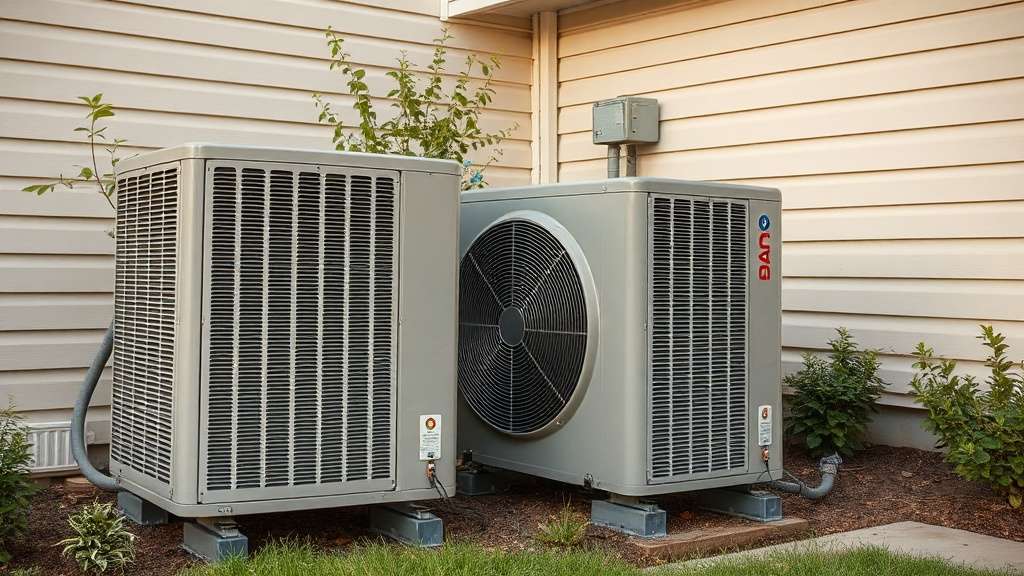
A heat pump doesn’t generate heat. It moves it. Using refrigerant and a compressor, it pulls thermal energy from the outdoor air and transfers it inside. Even at 40°F, there’s still usable heat energy in the air — enough for a modern heat pump to deliver 2.5 to 4 units of heat energy for every 1 unit of electricity it consumes. That ratio is called the Coefficient of Performance (COP), and it’s why heat pumps can cut your heating costs by 30–50% compared to electric resistance heat.
The catch: as outdoor temps drop below freezing, a heat pump has to work harder. Below about 25–30°F, older heat pump models struggled to keep up without backup electric resistance strips kicking in — which spikes your energy bill fast. Modern cold-climate heat pumps handle this much better, maintaining strong performance down to 5°F or even lower.
For the CSRA, where a “cold snap” usually means a few nights in the mid-30s, that limitation almost never matters.
The Real Cost Comparison for Augusta Homeowners
Let’s put real numbers on this instead of vague generalizations.
A mid-efficiency gas furnace installation in the Augusta area typically runs $3,500–$6,500 including equipment and labor. A quality heat pump installation for a comparable home runs $5,000–$10,000 — higher upfront, but that price includes your cooling system too, since a heat pump handles both heating and air conditioning.
That’s a key point most comparisons bury. If your AC unit and your furnace both need replacing, installing a heat pump means buying one system instead of two. That changes the math significantly.
On monthly operating costs, a gas furnace running at 96% AFUE efficiency might cost you $90–$130/month to heat a 2,000 sq ft home during an Augusta winter. A comparable heat pump, at current Georgia Power rates, typically runs $55–$85/month for the same home. Over a 15-year equipment lifespan, that difference adds up to $4,500–$8,100 in savings — before accounting for gas price volatility.
Natural gas prices in Georgia have swung dramatically over the past several years. Electricity rates are more stable and increasingly offset by solar, which pairs exceptionally well with heat pumps if you’re thinking long-term.
Heat Pump Installation in Augusta, GA: What Makes It Work Here
The CSRA’s climate is genuinely ideal for heat pump performance. Augusta sits in USDA climate zone 8a — mild winters, hot summers, and very few extended cold snaps that would push a heat pump to its limits.
In our years of service across Augusta, Evans, Martinez, and Grovetown, the team at Anderson HVAC has seen a clear pattern: homeowners who switch from aging furnaces to properly sized heat pumps consistently report lower utility bills and more even, comfortable heat throughout the house. Furnaces tend to blast hot air in cycles, creating temperature swings. Heat pumps deliver a steadier, more consistent warmth — more like a slow simmer than a blowtorch.
One thing most installers don’t tell you upfront: sizing matters more with heat pumps than furnaces. An oversized heat pump will short-cycle — turning on and off too frequently — which reduces efficiency and wears out the compressor faster. An undersized unit will run constantly and still underperform on the coldest nights. Manual J load calculations aren’t optional; they’re the difference between a system that works beautifully and one that disappoints from day one.
If you’re comparing quotes for heat pump installation and one contractor skips the load calculation, that’s a red flag worth taking seriously.
When a Furnace Actually Makes More Sense
Fairness matters here. There are real scenarios where a furnace is the better choice, even in Georgia.
If your home already has natural gas service and your existing ductwork is designed for high-velocity furnace airflow, replacing just the furnace can be significantly cheaper than converting to a heat pump system. A furnace installation in that context might run $3,500–$5,000 compared to $7,000+ for a full heat pump setup requiring duct modifications.
Homes in the more rural edges of the CSRA — where natural gas isn’t available and propane costs are high — often have older electric resistance heating systems. Switching those homes to a heat pump delivers the biggest savings, sometimes cutting heating costs by 50–60% immediately.
Also worth considering: if you heat with a wood stove or fireplace as your primary source and only need backup heat for the shoulder seasons, a budget furnace installation might be all you need. Don’t over-engineer the solution.
The Dual Fuel Option: Best of Both Worlds?
There’s a hybrid system most homeowners never hear about: a dual fuel heat pump. It pairs an electric heat pump with a gas furnace backup. The heat pump handles most of the heating season efficiently, and the furnace kicks in automatically when temperatures drop below the point where the heat pump loses its efficiency edge — typically around 35–40°F in Georgia.
For CSRA homeowners who already have gas service and want maximum efficiency without any cold-weather anxiety, dual fuel is worth a serious look. The upfront cost is higher — typically $8,000–$12,000 installed — but operating costs are often the lowest of any option over a full year.
Anderson HVAC has installed dual fuel systems across the Augusta metro, and they’re particularly popular in larger homes where heating costs are significant enough to justify the investment.
What About Repair Costs Down the Road?
No system lasts forever, and both options have different long-term maintenance profiles.
Gas furnaces are mechanically simpler in some ways — fewer moving parts, well-understood failure modes. Common repairs involve heat exchangers, ignitors, and gas valves. A cracked heat exchanger, which can happen after 15+ years, is a safety issue (carbon monoxide risk) and often means replacement rather than repair.
Heat pumps have more components — compressors, reversing valves, refrigerant systems — and require a technician certified in refrigerant handling. Heat pump repair tends to cost $200–$800 for most common issues. Compressor replacement, the most expensive scenario, runs $1,200–$2,500 but is rarely needed before year 10 on a quality unit.
One practical advantage for Augusta homeowners: your heat pump contractor and your AC repair tech are the same person. The system that heats your home in January is the same one cooling it in July. Any hvac repair in Augusta, GA that touches your heat pump covers both functions. That simplicity has real value — one relationship, one service history, one call when something goes wrong.
If you ever need air conditioning repair in Augusta, Georgia, a heat pump system means your heating contractor already knows your equipment inside and out.
Making the Final Call: A Simple Decision Framework
Run through these questions honestly:
- Do you already have natural gas service and a furnace under 10 years old? Stick with it. Replace it with a new furnace installation when the time comes.
- Is your current system (furnace or AC) over 12 years old and needing replacement? Strong case for a heat pump — replace both systems at once and start saving immediately.
- Are you on propane, oil, or electric resistance heating? A heat pump will almost certainly cut your bills significantly. This is a straightforward upgrade.
- Do you want one system for both heating and cooling? Heat pump wins every time for the CSRA climate.
- Do you have cold-weather anxiety about heat pumps? Consider dual fuel — you get efficiency without compromise.
The right answer depends on your home, your current setup, and your priorities. That’s why a real assessment from someone who knows the local climate and has seen hundreds of installations in Augusta, Evans, and Grovetown is worth more than any online calculator.
Get the Right System for Your CSRA Home
Anderson HVAC has been helping Augusta-area homeowners navigate exactly this decision for years. Whether you’re replacing an aging system, trying to cut your utility bills, or just want an honest second opinion on a quote you’ve already received, the team is straightforward with you — even when the answer isn’t the most expensive option.
For most CSRA homes, heat pump installation in Augusta, GA delivers the best combination of year-round efficiency, lower operating costs, and long-term value. But every home is different, and getting the sizing and installation right matters as much as the equipment itself.
Reach out to Anderson HVAC at callandersonhvac.com to schedule a no-pressure assessment. Bring your last few utility bills — that alone can tell a trained technician a lot about what your home actually needs.