
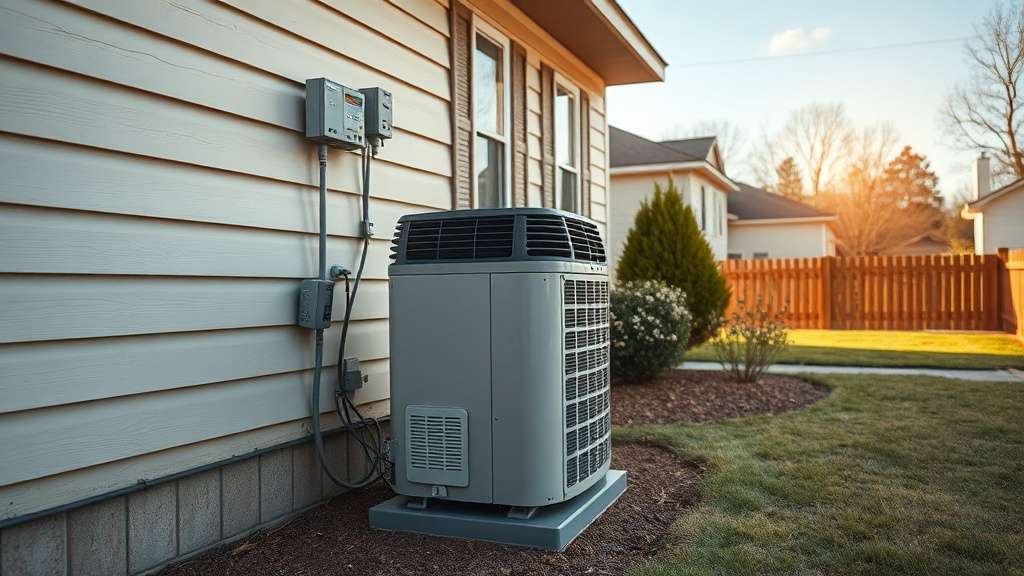
Most AC systems don’t just quit overnight. They send signals for weeks — sometimes months — before they finally give out. The problem is, those signals are easy to dismiss when it’s still mild outside. By the time July rolls around and Grovetown is sitting at 97°F with 80% humidity, you’re not just uncomfortable. You’re calling for emergency service, waiting two or three days for a technician, and paying premium rates because everyone else’s system broke down at the same time.
Getting ahead of that scenario is simple — if you know what to look for. These are the warning signs Grovetown homeowners should be checking right now, before summer arrives and the real pressure begins.
Why Grovetown’s Climate Makes Early AC Repair Non-Negotiable
The CSRA doesn’t ease into summer. Temperatures regularly spike into the upper 90s by late May, and the humidity compounds everything. An AC system that’s already straining in April will not survive a Georgia summer without intervention.
Most people don’t realize that AC systems experience the highest failure rates during the first heat wave of the season — not the middle of summer. That initial spike from mild to scorching puts maximum stress on components that have been sitting idle. If something was borderline in March, it breaks in May.
Catching a refrigerant leak or a failing capacitor in spring costs $150 to $450 in most cases. Waiting until the system dies completely? You’re looking at potential compressor replacement ($1,200 to $2,500) or full system replacement ($5,000 to $10,000+). The math is not subtle.
AC Repair Warning Sign #1: Warm or Lukewarm Air From the Vents
This one sounds obvious, but here’s the part most articles skip: your AC can be blowing air that feels slightly cool but is still far too warm to actually lower your home’s temperature. Many homeowners chalk this up to “it just takes time” and wait it out for hours before realizing something is wrong.
Hold your hand over a vent for 30 seconds. The air should feel noticeably cold — not just room temperature with a breeze. If it doesn’t, you’re likely dealing with one of two issues: low refrigerant levels or a failing compressor.
Low refrigerant is the more common culprit. Refrigerant doesn’t “run out” like gasoline — if levels are low, there’s a leak somewhere in the system. Topping it off without fixing the source is a short-term patch, not a repair. A reputable technician will locate and seal the leak before recharging the system.
Weak Airflow: The Warning Sign That Hides in Plain Sight
Walk to your furthest vents from the air handler. Place your hand near the register — is there a strong, consistent push of air, or is it barely trickling out?
Weak airflow is one of the most misdiagnosed problems we see. Homeowners assume it’s a dirty filter — and sometimes it is. But persistent weak airflow after a filter change usually points to one of three things:
- A failing blower motor that’s losing torque and struggling to move air through the duct system
- Duct leaks that are bleeding conditioned air into your attic or crawlspace before it reaches the rooms you’re trying to cool
- A frozen evaporator coil, which blocks airflow at the source — and is often caused by the same low refrigerant issue mentioned above
Duct leaks are especially common in older Grovetown homes built in the 1990s and early 2000s. In our experience serving the area, it’s not unusual to find systems losing 20 to 30 percent of their conditioned air through deteriorating duct connections. That’s a significant chunk of your energy bill going nowhere useful.
Unusual Smells: What Your AC Is Actually Telling You
Odors are one of the most specific diagnostic tools you have as a homeowner — if you know how to read them..
Musty or mildew smell: Almost always means moisture is sitting in your ducts or on your evaporator coil. Mold growing in an HVAC system circulates spores throughout your entire home every time the system runs. This isn’t just an air quality annoyance — it’s a health issue, and it tends to get dramatically worse over summer when humidity is highest.
Burning or electrical smell: Shut the system down and call for service immediately. This typically indicates an overheating motor, failing electrical components, or wiring issues. These are not “wait and see” situations.
Rotten egg or sulfur smell: This is almost always a natural gas issue related to your heating system, not your AC — but it warrants an emergency call regardless. Don’t try to diagnose it yourself.
A faint smell that only appears when the AC first kicks on and then fades is usually dust burning off the coil after a long dormant period. If it persists more than a few minutes or comes back every cycle, get it checked.
Rising Energy Bills: The Expensive Warning Sign Everyone Ignores
Pull up your utility bills from the past two or three months and compare them to the same period in 2025. A properly functioning AC system should deliver roughly consistent efficiency year over year. If your bills have crept up 15 to 25 percent without a dramatic change in your usage habits or local utility rates, your system is working harder than it should to achieve the same result.
This is the sneaky one. The AC still cools the house. The temperature still hits your thermostat target. But the system is running longer cycles, consuming more electricity, and quietly straining components toward failure — and you’re paying for all of it in real time.
An air conditioner tune-up in spring often uncovers exactly this problem. Dirty coils, low refrigerant, and worn contactor points all force the system to work inefficiently. Cleaning and tuning a system can realistically reduce energy consumption by 5 to 15 percent — which adds up to real money over a Georgia summer that runs from May through October.
Strange Noises: A Field Guide to What Each Sound Means
Your AC should produce a consistent hum when running. Any deviation from that baseline is worth paying attention to.
- Banging or clanking: A loose or broken part inside the compressor or blower assembly. This won’t resolve itself and typically gets worse fast.
- Squealing or screeching: Usually a belt issue or a bearing failing in the blower motor. Caught early, this is a relatively affordable fix. Ignored, it becomes a full motor replacement.
- Clicking that doesn’t stop: Normal clicking happens at startup and shutdown. Continuous clicking suggests a relay or capacitor problem — the system is trying to start and failing repeatedly.
- Hissing or bubbling: Strong indication of a refrigerant leak at a specific point in the line. Hissing is refrigerant escaping as gas; bubbling means it’s in liquid form at the leak point.
One thing we’ve noticed after years of hvac repair in Grovetown, Georgia: homeowners often hear a noise for weeks and assume it’s “normal.” By the time it gets loud enough to worry them, the secondary damage — a seized bearing that took out a motor, a refrigerant leak that froze the coil — has already multiplied the repair cost significantly.
The AC Is Short-Cycling — And That’s a Big Deal
Short-cycling means your system turns on, runs for just a few minutes, shuts off, and repeats. A healthy system runs in longer, steady cycles — typically 15 to 20 minutes when it’s hot outside.
Short-cycling is particularly damaging because compressor startup is the most electrically stressful moment in the entire operating cycle. Every abbreviated cycle is essentially forcing your compressor through maximum stress repeatedly without allowing the system to actually do its job. It accelerates wear significantly and can shorten a compressor’s remaining lifespan by years.
The causes range from an oversized system (a common installation mistake) to a failing thermostat, a refrigerant issue, or a tripping safety switch. All of these require professional diagnosis — there’s no reliable homeowner fix for short-cycling.
Don’t Wait Until You Need Emergency HVAC Repair
Emergency HVAC repair during a Georgia summer heatwave typically runs 1.5 to 2 times the normal service rate — and that’s assuming you can get a technician quickly. During peak season, wait times of two to four days are not unusual across the CSRA, meaning you’re spending those days in a home that’s 85°F or higher.
If you need your experts in air conditioning repair in Augusta, GA, Anderson HVAC serves Grovetown and the surrounding CSRA with full air conditioning repair, maintenance, and installation services. Scheduling a pre-summer inspection now — rather than waiting for a breakdown — is the single most cost-effective decision most homeowners can make heading into summer 2026.
A thorough inspection covers refrigerant levels, electrical connections, coil condition, blower performance, thermostat calibration, and duct integrity. The cost is modest. The potential savings are significant.
One More Thing Most Articles Won’t Tell You
If your system is more than 12 to 15 years old and you’re looking at a repair that costs more than half the price of a new unit, the math often favors air conditioning installation over repair. A new system will be significantly more efficient than a 2010-era unit — modern systems achieve SEER ratings of 16 to 20+, compared to the 10 to 13 SEER ratings common in older equipment. That efficiency gap translates to real monthly savings on your utility bill.
The Anderson HVAC team can give you an honest assessment of whether repair or replacement makes more financial sense for your specific situation — without a sales pitch toward the more expensive option. That’s the kind of straight answer Grovetown homeowners deserve before making a several-thousand-dollar decision.
Don’t let a small problem become an expensive emergency. If your AC is showing any of these signs, schedule a diagnostic visit now. Call Anderson HVAC or visit callandersonhvac.com to book your pre-summer inspection before the summer rush makes scheduling difficult.