
Georgia Pollen Season Isn’t Just an Outdoor Problem
Georgia consistently ranks among the worst states in the country for airborne pollen. The combination of loblolly pine, oak, and sweet gum trees — all blooming in overlapping waves from February through May — creates that now-legendary yellow dust that coats cars, porches, and anything left outside for more than a few hours.
But what that pollen is doing inside your HVAC system is a different story entirely, and most homeowners never think about it until the system starts struggling or the repair bill arrives.
Your air handler pulls air from inside your home continuously. Every time a door opens, every time someone tracks in from outside, every time the wind gusts through a window screen — pollen enters. Your system then circulates that air, filters catch what they can, and the cycle repeats dozens of times a day. During peak pollen season in the Augusta area, that cycle is under far more stress than at any other time of year.
What Pollen Actually Does Inside Your System
A standard 1-inch fiberglass filter — the kind that comes in bulk packs at the hardware store — has a MERV rating between 1 and 4. That rating means it stops larger debris like dust bunnies and lint, but pollen particles in the 10–100 micron range slide right through or clog the surface rapidly. Either outcome is bad news.
When the filter loads up with pollen faster than expected, airflow across the evaporator coil drops. That restricted airflow causes the coil to run colder than designed, and you end up with a frozen coil — a situation that shuts down cooling entirely and can cause refrigerant pressure problems if left running. In our 15 years serving the CSRA, frozen coils in late March and April are one of the most common spring service calls we see, and a surprising number of them trace back to a pollen-choked filter that hadn’t been checked since fall.
Beyond the filter, pollen that slips through accumulates on the evaporator coil itself. A coil with even a thin layer of organic debris loses heat transfer efficiency, meaning your system runs longer to reach the same temperature. That translates directly to higher energy bills — often in the range of 10–15% more runtime — and accelerated wear on your compressor.
The Outdoor Unit Has Its Own Battle
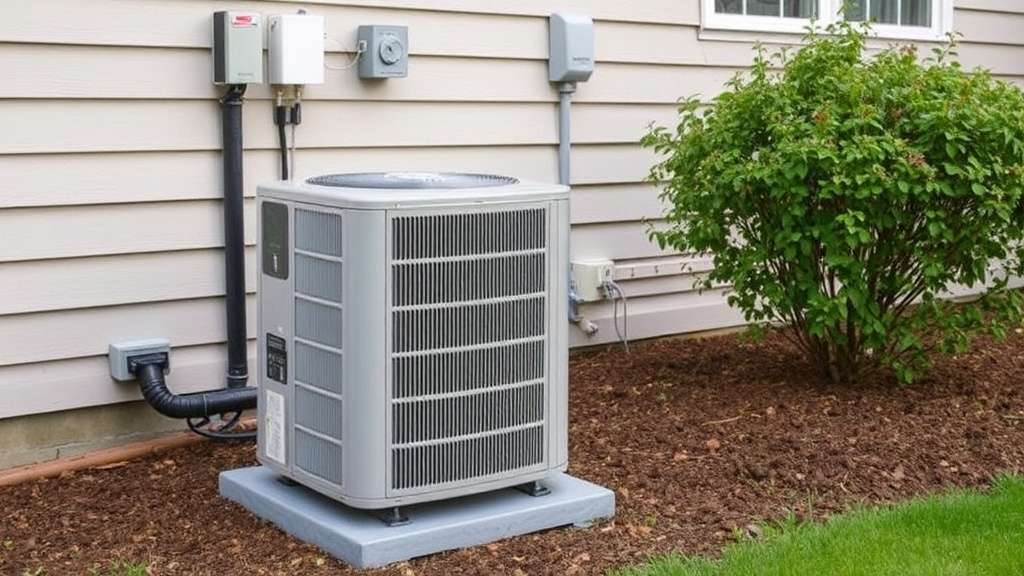
The condenser unit sitting outside your home is essentially a giant air-moving machine, and during Georgia pollen season it inhales everything floating in the air around it. Pollen, cottonwood fluff, and seed pods pack into the condenser fins — those thin aluminum strips that allow heat to escape from the refrigerant.
Clogged condenser fins force the refrigerant to carry more heat than the system was designed to handle. The compressor runs hotter and under higher pressure, which shortens its lifespan measurably. A compressor replacement typically runs in the $1,200–$2,000 range depending on your unit’s size and refrigerant type. A condenser cleaning during a spring tune-up costs a fraction of that and prevents the problem entirely.
AC Maintenance in Spring: Why Timing Is Everything
Scheduling HVAC maintenance in Augusta, GA right before peak cooling season — ideally in late March or early April — is the single most effective way to protect your system during the most demanding months of the year. Not after the first heat wave, not when something starts rattling. Before.
A properly timed AC maintenance visit addresses everything pollen season throws at your equipment. A trained technician will clean the evaporator and condenser coils, check refrigerant charge, inspect electrical connections that heat and pollen residue can degrade, and verify that airflow is where it needs to be across the entire system. These aren’t optional extras — they’re what separates a system that runs efficiently through summer from one that limps along or fails entirely in July.
Brian Tabor, one of Anderson HVAC’s service professionals, routinely finds condenser coils on spring visits that are so packed with pine pollen and debris that airflow is visibly restricted before any instruments are even connected. Catching that in April versus July is the difference between a $150 cleaning and a potential compressor replacement.
Filter Strategy During Pollen Season
During peak pollen season, your standard filter change schedule doesn’t apply. A filter you’d normally replace every 60–90 days may need to come out after 3–4 weeks in late March through May. Pull it out and hold it up to a light — if you can’t see light through it, it’s already restricting airflow.
Upgrading to a higher-MERV filter (MERV 8–11) captures pollen far more effectively than standard fiberglass, but there’s a tradeoff: higher-MERV filters also restrict airflow more, which means your system has to work harder to pull air through. The answer isn’t always to grab the thickest, densest filter on the shelf. Match the filter rating to what your system’s blower motor is designed to handle — something a technician can verify during a maintenance visit.
Indoor Air Quality Services: The Upgrade That Changes Everything
If someone in your home has seasonal allergies, asthma, or any respiratory sensitivity, standard filtration alone during Georgia’s pollen season often isn’t enough. This is where dedicated indoor air quality services make a real, measurable difference.
A media air cleaner installation replaces the standard 1-inch filter slot with a 4–5 inch deep filtration cabinet that holds a much denser media filter. These systems achieve MERV 10–13 ratings without the airflow restriction problems of thin high-MERV filters, because the larger surface area does the work instead of fiber density alone. One media air cleaner installation can dramatically reduce the pollen load your system recirculates — and these filters typically only need changing once a year.
For households where air quality is a serious concern, a HEPA air cleaner takes filtration further still. True HEPA filtration captures 99.97% of particles at 0.3 microns, which includes pollen, mold spores, pet dander, and fine dust. These units are typically installed as standalone components that work alongside your existing HVAC system, and they’re particularly effective for bedroom zones where people spend the most cumulative time.
Kennith Anderson, who founded this company with over 30 years of HVAC industry experience, has long emphasized indoor air quality services as one of the most underutilized tools available to homeowners. The equipment exists to dramatically improve what you breathe indoors — it just doesn’t get talked about as often as a new air conditioner installation.
The Spring HVAC Checklist for Georgia Homeowners
Use this as your action list before the heat season kicks in:
- Replace or inspect your air filter in late March, then again in late April regardless of schedule.
- Clear a 2-foot perimeter around your outdoor condenser unit — pollen and debris accumulate around vegetation.
- Visually inspect your condenser fins for pollen packing and schedule a professional coil cleaning if they look matted.
- Schedule a professional AC maintenance visit before the first hot stretch — ideally before temperatures consistently exceed 80°F.
- Ask your technician whether your current filter setup is adequate for your home’s pollen load, or whether a media air cleaner upgrade makes sense.
When Pollen Season Becomes an Air Conditioning Repair Situation
Some systems don’t make it through spring without problems, especially units that skipped maintenance the previous year. The signs that pollen-related strain has crossed into air conditioning repair territory include the system short-cycling (turning on and off rapidly), ice forming on the indoor unit or refrigerant lines, weak airflow at the vents, or the system running continuously without reaching the set temperature.
None of those symptoms resolve on their own, and all of them get worse the longer they run. A frozen coil, for example, can cause liquid refrigerant to flood back to the compressor — a scenario that can turn a simple service call into an air conditioning installation conversation if the compressor fails as a result.
The good news is that every one of those failure paths is interruptible with the right maintenance at the right time. Fifteen years of serving Augusta and the surrounding communities has taught the Anderson HVAC team exactly where the pressure points are, and spring pollen season creates a predictable and preventable set of problems every single year.
Your system deserves the same seasonal attention you’d give your car before a long road trip. A little investment in April protects a much larger investment through the rest of the year.
Written by the Anderson HVAC team — Authorized Rheem Dealer and family-operated HVAC specialists serving the Augusta area since 2011, with over 30 years of combined field experience on our team.
Schedule your spring AC maintenance visit with Anderson HVAC at callandersonhvac.com before peak cooling season arrives.