
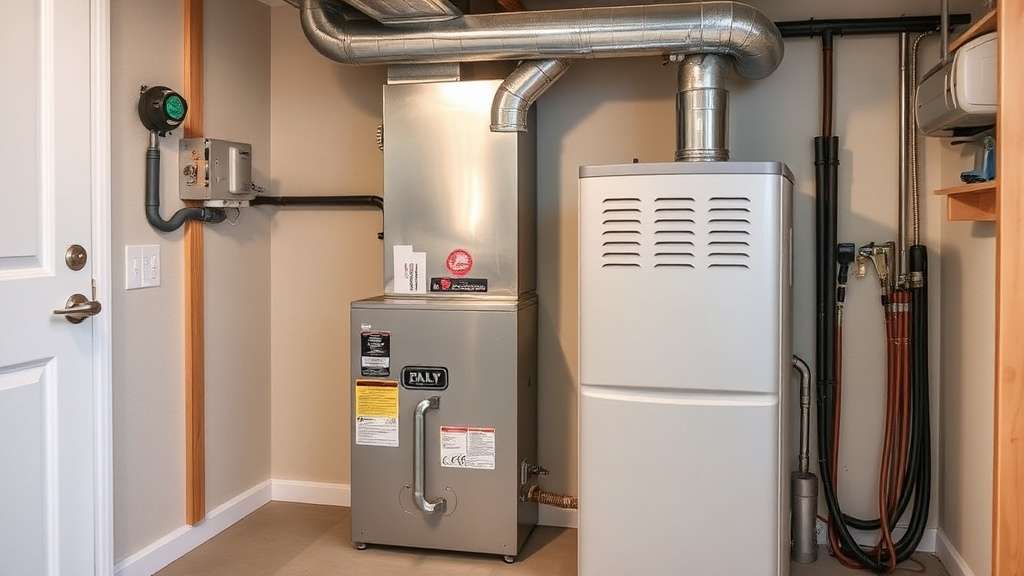
Your Furnace Wasn’t Designed With Georgia in Mind
A furnace installed in Minneapolis runs hard from October through April — consistent, predictable demand that actually keeps internal components properly lubricated and sealed. A furnace in Augusta, Georgia? It might sit idle for eight or nine months, then get switched on for two weeks of serious cold before going dormant again.
That stop-and-start cycle is surprisingly hard on mechanical systems. Seals dry out during long dormant periods. Burners develop minor corrosion sitting unused through Georgia’s humid summers. Heat exchangers expand and contract with every short heating cycle rather than maintaining steady operating temperatures.
So how long should your furnace actually last here? The honest answer: less than the national average — and understanding why helps you plan smarter.
The Real Numbers for Georgia Furnaces
The U.S. Department of Energy and most manufacturer spec sheets list furnace lifespan at 15 to 20 years. That benchmark assumes a northern or midwestern climate with regular, sustained seasonal use. For Georgia homeowners in the CSRA — Augusta, Grovetown, Evans, and surrounding areas — a more realistic window is 14 to 17 years for a well-maintained system.
Poorly maintained units? Those often tap out closer to 10 to 12 years. That’s not a scare tactic — it’s what the service records show after enough furnace calls across enough seasons.
A few factors specific to this region compress that timeline faster than most homeowners expect.
Humidity Does More Damage Than Cold
Georgia’s humidity doesn’t disappear in winter — it just drops slightly. Average relative humidity in Augusta hovers around 55 to 65 percent even in January. That persistent moisture accelerates rust on heat exchangers, degrades flue connections, and promotes mold growth in ductwork that then circulates through your system every time the furnace kicks on.
A furnace in a dry climate can tolerate minor neglect for years. One sitting in Georgia’s humid air rewards neglect with corrosion you won’t see until the heat exchanger cracks — which is both a performance issue and a carbon monoxide risk.
Short Cycling Is Harder on Components Than Long Runs
Because Georgia winters are mild, your furnace often runs in short bursts — firing up for 10 to 15 minutes, shutting down, then restarting an hour later. Each startup cycle stresses the igniter, the blower motor bearings, and the heat exchanger more than a sustained two-hour run would. In colder climates, furnaces get long continuous burn cycles that are easier on the ignition system. Here, they get hundreds of cold starts per season instead.
Over a 15-year period, that difference accumulates. It’s one reason furnace repair calls in Augusta often involve igniters and blower motors — the components that take the brunt of all those restarts.
Warning Signs Your Furnace Is Running on Borrowed Time
Age alone doesn’t tell the whole story. A 16-year-old furnace with a solid maintenance history might still run efficiently. A 10-year-old unit that’s never been serviced might already be costing you significantly more than it should. These are the signs that a system is approaching the end of its useful life, regardless of the calendar:
- Your heating bills have climbed noticeably over the past two seasons without a change in usage habits — a deteriorating furnace typically loses efficiency in the range of 5 to 10 percent annually in its final years.
- You’re seeing uneven heating across rooms, which often signals a failing blower motor or cracked heat exchanger that can no longer distribute air properly.
- Repair calls are becoming routine — if you’ve paid for furnace repair more than twice in three years, the math usually favors replacement over continued patchwork.
- The burner flame is yellow or orange instead of blue, which can indicate carbon monoxide issues from an aging heat exchanger.
- Unusual sounds — banging at startup, persistent rattling, or a high-pitched squeal from the blower — that weren’t there two seasons ago.
Any one of these in isolation might be a simple repair. Two or more together, on a system over 12 years old, and the conversation shifts toward replacement planning.
What Maintenance Actually Does to the Lifespan Equation
Furnace maintenance in Georgia isn’t just about keeping the system clean — it’s specifically about counteracting the humidity and short-cycling effects that chip away at longevity here. A properly executed annual tune-up addresses corrosion points before they become failures, verifies heat exchanger integrity, and catches igniter degradation early enough to replace it for $150 rather than deal with a no-heat call at 11 p.m. in January.
In 15 years serving Augusta-area homeowners, the pattern is consistent: systems that receive annual maintenance routinely reach 16 to 18 years. Systems that only get attention when something breaks rarely make it past 11 or 12. That gap represents thousands of dollars in premature replacement costs.
One thing most homeowners don’t account for: Georgia’s pollen seasons. The CSRA gets hit hard in spring, and airborne particulates load up filters and heat exchangers far faster than average. A filter change schedule designed for a northern climate — once every three months — isn’t adequate here. During high-pollen months, monthly checks are worth the five minutes they take.
The Ductwork Factor Nobody Talks About
A furnace is only as effective as the duct system it’s pushing air through. Leaky ducts in Georgia attics are practically universal in homes over 15 years old — and attic temperatures in Augusta summers regularly exceed 130 degrees Fahrenheit. That heat degrades duct seals, causes flex duct to sag and kink, and means your furnace is working harder than necessary to compensate for air loss before it even reaches the living space.
Duct sealing alone can improve system efficiency by 20 to 30 percent in homes with significant leakage, according to ENERGY STAR data. A furnace running more efficiently generates less wear per heating hour — which translates directly into longer service life.
When Furnace Repair in Augusta, GA Makes Sense — and When It Doesn’t
The repair-versus-replace decision comes down to one calculation most technicians call the “5,000 rule”: multiply the age of your furnace by the estimated repair cost. If that number exceeds $5,000, replacement is usually the smarter financial call. A 14-year-old unit facing an $800 heat exchanger repair hits $11,200 — well past the threshold. A 6-year-old unit with the same repair is only $4,800, making the fix worthwhile.
That said, not every furnace repair in Augusta, GA situation fits a formula. An aging but otherwise sound system on a tight budget might justify one more repair cycle. A unit with multiple simultaneous failures — blower motor plus igniter plus heat exchanger showing early cracks — tells a different story even if each individual repair seems minor.
Heat pump installation is worth discussing at this stage too, particularly for Georgia’s climate. Because winters here are mild, a heat pump handles the vast majority of heating days more efficiently than a gas furnace. Many Augusta homeowners moving off an aging furnace find that a heat pump covers their actual heating needs with lower operating costs, reserving a backup heat strip for the handful of days temperatures dip below freezing.
How to Get the Most Years Out of the System You Have
Annual professional maintenance is the single highest-return action you can take — the $80 to $150 yearly cost is genuinely the cheapest insurance available for a $3,000 to $6,000 appliance. Beyond that, a few habits specific to Georgia’s environment pay off consistently.
Keep the area around your furnace dry and clear. Georgia’s humidity means condensation can form on and around the unit during certain weather transitions — a small dehumidifier in a crawl space or basement mechanical room makes a real difference. Check your flue pipe connections annually for rust or separation; Georgia’s temperature swings between seasons stress those joints more than most homeowners realize.
And when your system does turn 10 years old, start budgeting for replacement even if nothing seems wrong. Knowing a $5,000 to $7,500 replacement is likely in the next four to six years changes how you think about repair decisions in the meantime — and eliminates the financial shock when the time comes.
Know your unit’s age before that conversation is forced on you by a January failure. The serial number on the data plate will tell you the manufacture date, and most manufacturer websites have a decoder tool to confirm it.
If your system is over 12 years old and repair costs are climbing, replacement is likely the better move. A qualified technician can assess your specific unit’s condition, efficiency losses, and remaining service life in a single visit — giving you real numbers to work with rather than guesswork.
Written by the Anderson HVAC team — family-operated HVAC specialists serving the Augusta area for 15 years, founded by Kennith Anderson on 30 years of hands-on industry experience and a commitment to treating every customer like family.
Schedule a furnace inspection or request a free consultation with Anderson HVAC at callandersonhvac.com.