
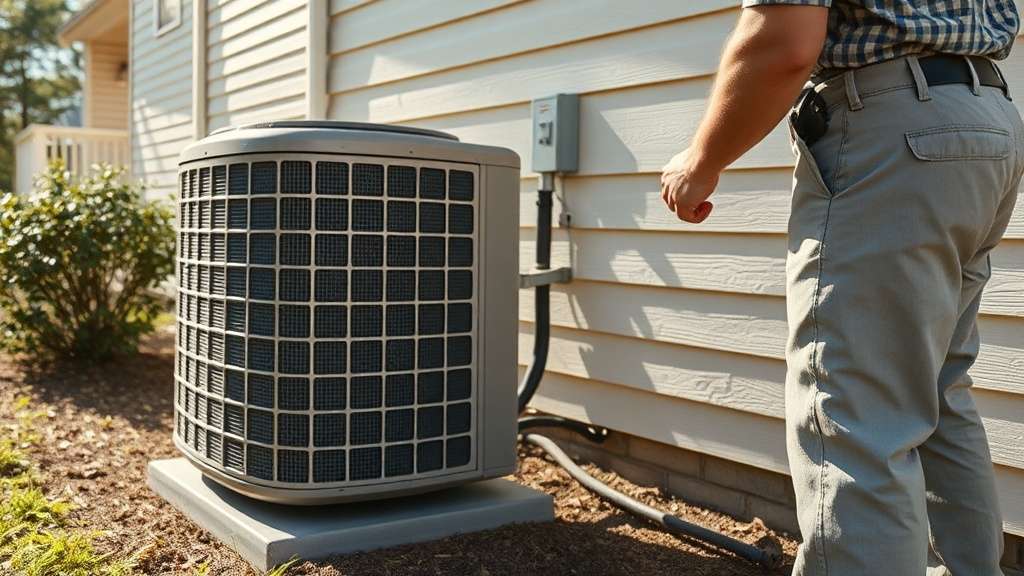
Your AC Is Lying to You
The compressor is humming. The vents are blowing. Your thermostat says it’s been running for two hours. But walk across your living room floor and you’ll know immediately — it’s still 82 degrees inside, and your home feels more like a greenhouse than a refuge from Augusta’s brutal summer heat.
Here’s what most homeowners get wrong: a running AC is not the same as a working AC. The unit being on is one thing. Whether it’s actually moving heat out of your home is something else entirely. These two things can become completely disconnected, and when they do, your system will run indefinitely without ever reaching your set temperature.
The good news? Each possible cause has a fingerprint — specific symptoms that point directly at the problem. Knowing those fingerprints could save you hours of discomfort and a lot of money. Let’s start with the one that surprises people most.
Low Refrigerant: The Slow Leak Nobody Catches in Time
Refrigerant doesn’t get “used up” the way gasoline does. If your system is low, there’s a leak — and that leak is almost certainly getting worse.
Refrigerant is the substance that absorbs heat from your indoor air and carries it outside. Without the right charge, that heat transfer breaks down. Your system keeps running because it’s trying to reach the thermostat’s target, but it physically cannot do the job with reduced refrigerant pressure.
The telltale signs of a refrigerant leak include ice forming on the refrigerant lines or the indoor coil, a hissing or bubbling sound near the unit, and unusually warm air blowing from the vents even after an hour of operation. You might also notice your electric bill creeping up — a low-charge system works harder and longer, and in Augusta’s summer heat, that can mean an extra $60–$100 on your monthly bill without any improvement in comfort.
What contractors won’t always tell you upfront: simply topping off the refrigerant without finding and fixing the leak is a temporary fix at best. EPA regulations require licensed technicians to repair the leak before recharging, and any reputable company doing air conditioning repair in Augusta, GA will do exactly that. If someone offers to just “add a little Freon” without a leak test, that’s a red flag.
Dirty Evaporator or Condenser Coils — and Why One Month Makes a Difference
Two sets of coils make your AC work. The evaporator coil (inside your home) absorbs heat. The condenser coil (outside) releases it. Both need clean surfaces to do their jobs efficiently.
A layer of dirt as thin as 0.1 millimeters on an evaporator coil can reduce heat transfer efficiency by up to 30%. That’s not a typo. A film of dust barely visible to the naked eye can make your system work nearly a third harder just to achieve the same result.
The condenser coil outside faces even more abuse. In the Augusta area, pollen season alone can coat condenser fins in a thick yellow layer within days. Add lawn clippings, cottonwood, and general outdoor grime, and you’ve got a coil that can’t shed heat properly. When that happens, the refrigerant coming back into your system doesn’t cool down enough to absorb heat effectively indoors — and the cycle starts failing.
Most homeowners don’t realize the outdoor unit needs regular attention, not just the filter inside. A professional air conditioner tune-up typically includes coil cleaning for both units, and in Georgia’s climate, doing that once a year — ideally in spring before peak heat — makes a measurable difference in performance. We’ve seen systems drop from running 90% of the time down to 50–60% duty cycles after a thorough coil cleaning alone.
The Undersized Unit Problem: When the Math Was Wrong from Day One
This is one of the most common issues we see in CSRA homes, and it’s also one of the most frustrating because it’s a design problem, not a maintenance problem.
Air conditioners are sized by tonnage — one ton equals 12,000 BTUs of cooling capacity per hour. A properly sized unit for Augusta’s climate typically requires about 400–500 square feet per ton, but that calculation has to account for ceiling height, insulation quality, window exposure, and how many people live in the home. A 2,000-square-foot house in Martinez with poor attic insulation and west-facing windows might need a 5-ton unit, not the 3.5-ton system the previous owner installed.
An undersized system will run constantly on hot days because it simply doesn’t have the capacity to overcome the heat load. The thermostat will never be satisfied. The unit won’t short-cycle — it’ll just run and run, wearing down its components prematurely and still leaving you uncomfortable.
The fix here isn’t ac repair — it’s air conditioning installation of a properly sized system. A reputable HVAC company will perform a Manual J load calculation before recommending any equipment. If a contractor skips that step and just suggests replacing your existing unit with the same size, ask questions.
Airflow Failures: The Quiet Killers You Can Check Right Now
Restricted airflow is sneaky. Your system can be mechanically sound — good refrigerant charge, clean coils, correct size — and still fail to cool your home if air can’t move freely through the system.
Check these things right now before you pick up the phone:
- Your air filter. A clogged filter is the single most common cause of restricted airflow. If it’s been more than 60 days and you have pets or anyone with allergies in the home, pull it out. If you can’t see light through it, it’s overdue.
- Closed or blocked vents. Closing vents in unused rooms doesn’t save energy — it actually increases static pressure and can cause the evaporator coil to freeze. Walk your home and make sure every vent is fully open.
- Duct leaks. In Augusta and the broader CSRA region, many homes have ductwork running through unconditioned attic spaces. Duct connections can separate over time. Leaking ducts dump your cooled air into a 140-degree attic instead of your living room. Some estimates put duct leakage losses in older Georgia homes at 25–30% of total airflow — meaning you’re losing nearly a third of what you’re paying to cool.
If you’ve checked filters and vents and airflow still feels weak, duct inspection is the next step — and it requires a professional with a pressure gauge or blower door test.
Thermostat Problems and Electrical Gremlins
Sometimes the problem isn’t mechanical at all. A thermostat sensing the wrong temperature — because it’s in direct sunlight, near a heat-generating appliance, or simply failing — will keep calling for cooling indefinitely because it thinks the target temperature was never reached.
A quick test: use a separate thermometer to check the actual air temperature near your thermostat. If your thermostat reads 78 but the room is actually 72, the thermostat is the culprit, not the AC unit.
Faulty capacitors and contactors inside your outdoor unit can also cause the system to appear to be running while the compressor is actually not engaging properly. This is one of the most common repair calls we handle during Augusta’s peak season in June and July. Capacitors typically cost $150–$300 to replace — far cheaper than ignoring the issue until the compressor burns out, which can run $1,200–$2,500 or more.
When Augusta’s Heat Is Simply Winning
This one is worth saying plainly: on days when Augusta hits 100°F with 70% humidity, some homes will struggle to maintain 75°F no matter what. That’s not necessarily a broken system — it may be a system at the edge of its design limits.
During extreme heat events, your AC is fighting a heat load it wasn’t always sized to handle in extreme conditions. If your home struggles only on 100-degree days but cools fine when temperatures are in the low 90s, the system is probably performing correctly. If it struggles consistently at normal summer temperatures, something is wrong.
The distinction matters because it tells you whether you need a repair, a tune-up, or a conversation about upgrading your system’s capacity.
Time to Stop Guessing and Get Answers
Running through this list is a good starting point, but most of these issues — refrigerant leaks, coil condition, duct integrity, electrical components — require proper tools and training to diagnose accurately. Guessing at the wrong cause and treating it wastes time and money you shouldn’t have to spend.
Anderson HVAC has been diagnosing and fixing exactly these problems across Augusta, Evans, Grovetown, and the surrounding CSRA for years. Our technicians carry the diagnostic equipment to identify the actual root cause — not just the most obvious symptom. Whether it’s a refrigerant leak, a failing capacitor, or ductwork that’s been hemorrhaging conditioned air into your attic, we’ll find it and give you a straight answer about what it takes to fix it.
If your AC has been running nonstop without cooling your home, that’s the system telling you something. The longer it runs in that condition, the harder it works and the more components wear under the strain. For reliable ac repair in Augusta, GA, reach out to our team — we’re ready to get your home comfortable again.